To uphold this right, it is essential to provide access to inclusive play spaces that all children
can safely enjoy.
Unfortunately, nearly half of families with disabled children face accessibility problems with their local
playground, and 10% of them say their child has been hurt while using inaccessible play equipment.
This is why Playscape makes inclusivity and accessibility a top priority when designing or advising on
play spaces for children.
Play is not just a leisure activity; it’s a vital component in
a child’s development.
Rubber wetpour, bonded rubber mulch and artificial grass are examples of accessible surfaces when
properly maintained. Loose fill materials such as woodchip and gravel pose risks as they can become
uneven and are less wheelchair-friendly.
Consider entrances and exits too – if there is a border or level change between your play area and the
surrounding environment, a ramp should be provided for easy access.
Multi Deck & Wide Ramp Wheelchair
Roadway Tower with Panels, Slides
& Table Sand Pit
This means accommodating differences in not just physical abilities, but sensory and cognitive abilities too. Play can be physical, noisy and challenging, but equally it can be quiet and creative.
For this reason, it’s important to include diverse equipment that facilitates lots of different types of play.
A great example of this is multi-decked play frames that feature ramped access and a variety of different play panels, such as the play items to the left.
Our inclusive play equipment encourages children of all abilities to play together, by being accessible without compromising on fun and engagement. View our range of inclusive play equipment or get in touch with our team to start your inclusive playground design.

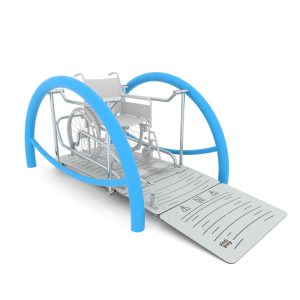
Steel & HPL Twin Bench and Table Roundabout with Surround Rail

Steel Inclusive Single See Saw Rocker for 1 x Wheelchair User
Inclusive play means creating playgrounds where children of all abilities, including those with physical, sensory, cognitive, or developmental differences can play, explore, and learn together. Inclusive playgrounds use accessible equipment, thoughtful layouts, sensory-rich activities, and varied play opportunities to remove barriers to participation. This matters because inclusive play supports social interaction, confidence, physical development, and a sense of belonging, giving every child meaningful opportunities to play alongside their peers.
Inclusive playground equipment includes wheelchair-accessible roundabouts, see-saws designed for wheelchair users, multi-deck play frames with ramped access, sensory and musical panels, and sand play tables at accessible heights. The goal is to accommodate physical, sensory, and cognitive differences, not just wheelchair access.
Rubber wetpour, bonded rubber mulch, and artificial grass are the most accessible playground surfaces when properly maintained. Loose-fill materials such as woodchip and gravel are less suitable as they can become uneven and are harder to navigate in a wheelchair. Level entrances or ramps should also be provided at all access points.
Yes. Playscape can assess your existing play space and recommend ways to improve accessibility whether that’s replacing surfacing, adding ramped access, introducing sensory play panels, or incorporating specific pieces of inclusive equipment alongside what’s already there.
Yes. At Playscape we take time to understand the varied needs of the children who will use the space and keep inclusivity at the heart of the design process whether the project is for a school, nursery, public park, or council play area.
Accessible play focuses on ensuring children with disabilities can physically use a playground for example, through ramps and wheelchair-friendly equipment. Inclusive play goes further, aiming to create an environment where children of all abilities play together, feel equally welcome, and can develop skills at their own pace.